Why I Chose a Roadloft Minivan Conversion Over a Sprinter
Transparency Note: This post may contain affiliate links. As an Amazon Associate and partner with other brands, I earn from qualifying purchases at no extra cost to you. I only recommend products I actually use and believe in.
Updated: March 31, 2026
If you've spent any time on van life social media, you already know the dominant aesthetic: a $150,000 Sprinter with shiplap walls, a full kitchen, and enough fairy lights to power a small town. It looks incredible. It also looks completely out of reach for most people — and for a long time, I thought that meant van life was out of reach for me too.
It wasn't. I just needed to stop looking at Sprinters.
I recorded a video walking through these reasons when I first launched van life in late 2023 — note that it references my previous brand name, GypsyWander, before I rebranded to The Van Lifestylist in September 2025. The core content is the same.
Watch: Why I Chose a Minivan for Van Life →
When I made the decision to go full-time, I had one non-negotiable: I was not going into debt to do it. That single requirement eliminated a lot of options — and pointed me straight toward a minivan.
Reason #1: Affordability — The Number That Actually Matters
I initially assumed I'd need to spend $12,000–$15,000 on a van. Once I added up everything else that comes with launching van life — the conversion kit, gear, insurance, and a financial cushion — that number wasn't going to work within the timeline I'd set for myself.
After talking to mechanics and doing serious research, I learned something that changed my math entirely: a well-maintained Toyota Sienna can realistically reach 300,000 miles or more. That meant I could look at older, higher-mileage vehicles and bring the purchase price down significantly without sacrificing reliability.
I sold my car for $8,000 and bought a 2006 Toyota Sienna with 197,000 miles for $6,000. Before I hit the road, I had all the preventative maintenance done that's typically due at 200,000 miles — and I still had money left over. That decision let me start van life earlier than I would have otherwise.
Function Over Fashion isn't just a tagline. It's the actual decision that got me on the road.
Van Lifestylist Tip: If affordability is the thing standing between you and van life, don't start with the vehicle you want — start with the vehicle that gets you there. You can always upgrade. You can't get back the time you spent waiting.
Reason #2: Space Optimization — More Than You'd Expect
Minivans have less square footage than a full-size cargo van — that's just true. But what surprised me was how livable that space became once I approached it intentionally.
My two non-negotiables were a workspace and room for a toilet. Everything else was flexible.
For my conversion, I chose a Roadloft removable, non-permanent conversion kit. The table alone sold me — I can comfortably fit four people around it, which I proved before I ever left the driveway when friends and I had lunch in the van. I don't keep the table up unless I'm working or need a surface, but knowing it's there matters.
The storage is genuinely impressive: under the bench, under the bed, and pull-out kitchen drawers in the back. Nothing wasted.
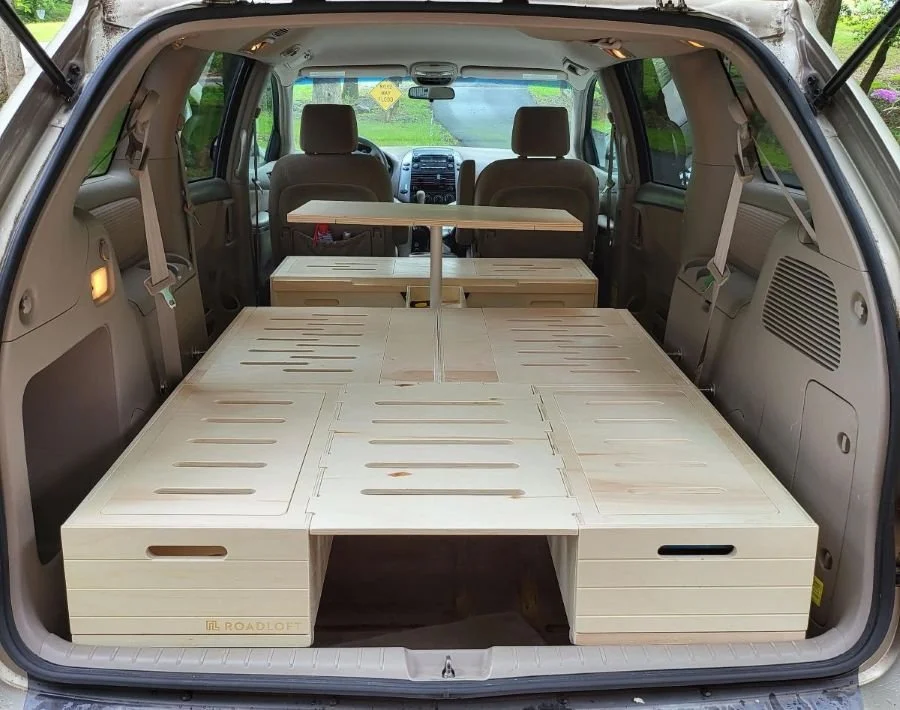
Here is a picture of the Roadloft Removeable Conversion Kit installed in my van.

Before I set out, my friends and I would sit in my van and have lunch! I don’t generally leave the table up unless I’m working or need a table, but the table is really what sold me on this for my conversion.
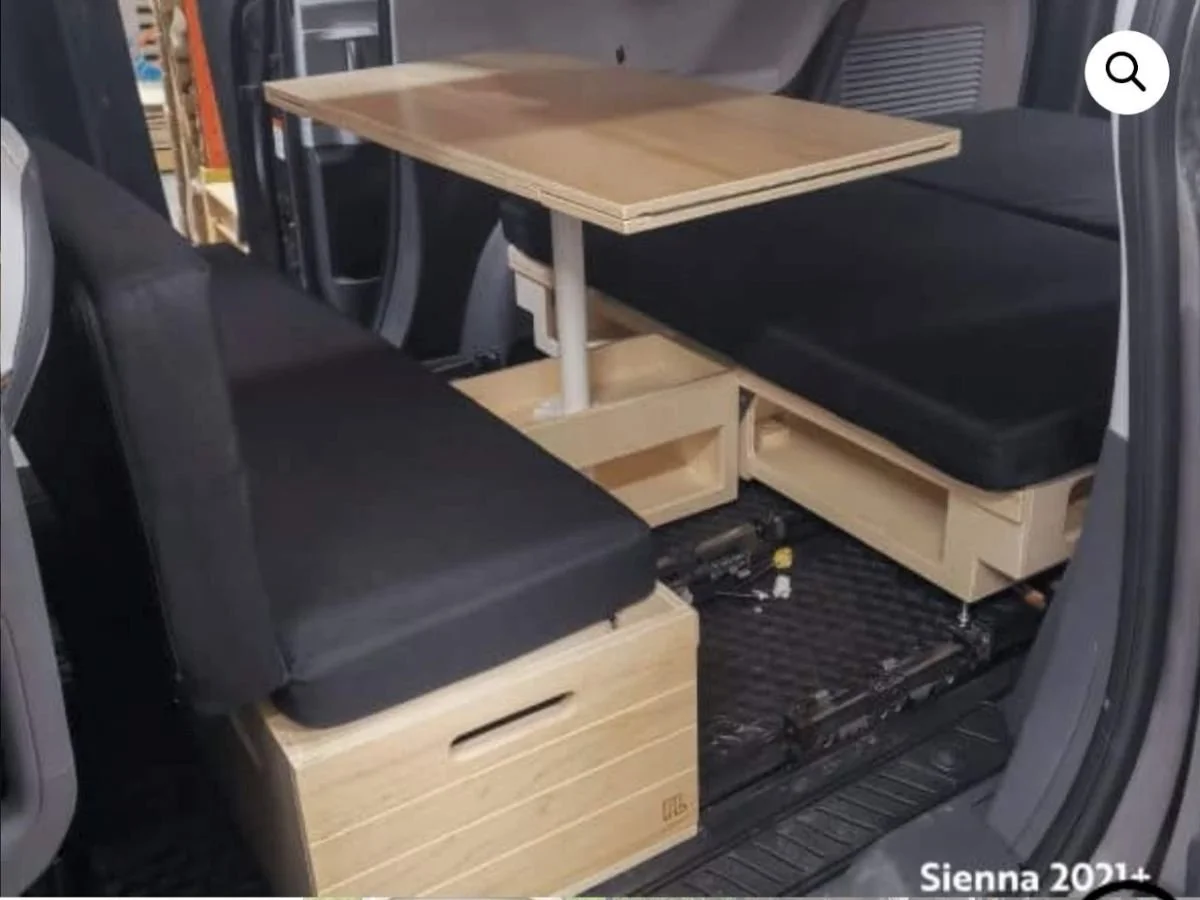
I have so much storage, under the bench and under the bed.
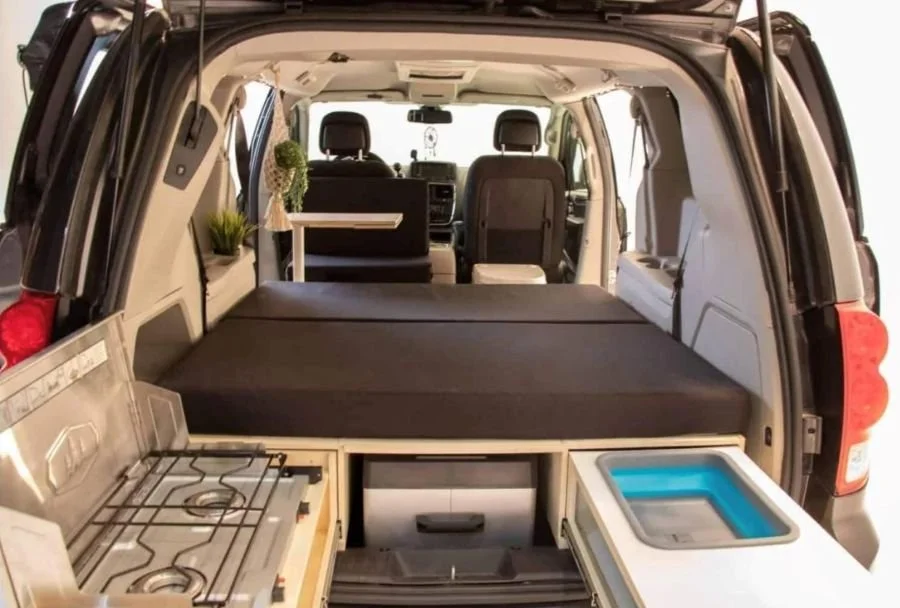
Then in the back there are pull out drawers for your kitchen and even more storage.
I chose Roadloft specifically because of two things: quality and health. Their wood is marine grade — resistant to humidity and moisture — and finished with an ecological, multi-layer varnish. When I learned that untreated or improperly finished wood in an enclosed space can off-gas toxic fumes and grow mold, the material question stopped being optional. I'm living and sleeping in this van. The air quality matters. If you want to go deeper on why material quality matters in a small living space, I wrote an entire post on building without toxic materials.
he other reason I'll never regret this choice: because the kit is removable and non-permanent, it moves with me. If I need a different vehicle, my conversion comes too. Use code RLVLS at checkout for nearly $100 of free accessories with your order.
Reason #3: Fuel Efficiency
Gas prices are unpredictable. A vehicle with better fuel efficiency gives you more miles per dollar, and on the road, that adds up faster than most people expect when they're planning their budget. A minivan consistently outperforms full-size cargo vans on mileage — another practical advantage that doesn't show up in Instagram photos but absolutely shows up in your monthly expenses.
Reason #4: Maneuverability and Parking
A few years before the Sienna, I lived full-time in a 33-foot motorhome. I loved that year, but I will never forget how limiting the size was — certain roads, certain campgrounds, and most urban parking situations were simply not accessible. I had to plan around the vehicle constantly.
With the Sienna, I park in a standard parking space. I drive through cities the same way I always have. That freedom of movement is something I didn't fully appreciate until I had the contrast.
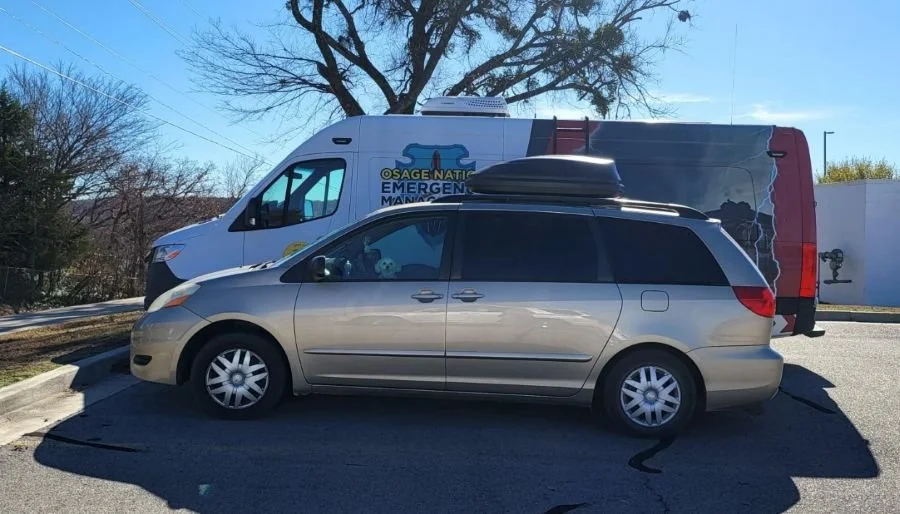
This is my van next to a Mercedes CamperVan.
Reason #5: Stealth
A minivan looks like a minivan. That matters more than people realize, especially when you're parking overnight in urban areas or residential neighborhoods. It blends in. It doesn't announce itself. For solo women traveling alone, that low profile isn't just convenient — it's a genuine safety advantage. I go deeper on stealth camping strategies in this post.
If you've been sitting on the van life decision because the cost feels impossible, I want you to reconsider the assumption that a bigger, newer, more expensive rig is the only way in. It isn't.
The Van Life Foundations Manual covers the full financial picture of launching van life — budgeting, vehicle decisions, and the systems that keep you on the road for the long term. Get the Van Life Foundations Manual →
And if you want to talk through your specific situation before you commit to anything, a Compass Call is a good place to start.
There's a version of van life that costs $150,000 and looks beautiful on a grid. There's another version that costs $6,000, gets you on the road six months earlier, and still takes you everywhere you want to go. I chose the second one. I haven't regretted it for a single mile.